Workflow & Automation


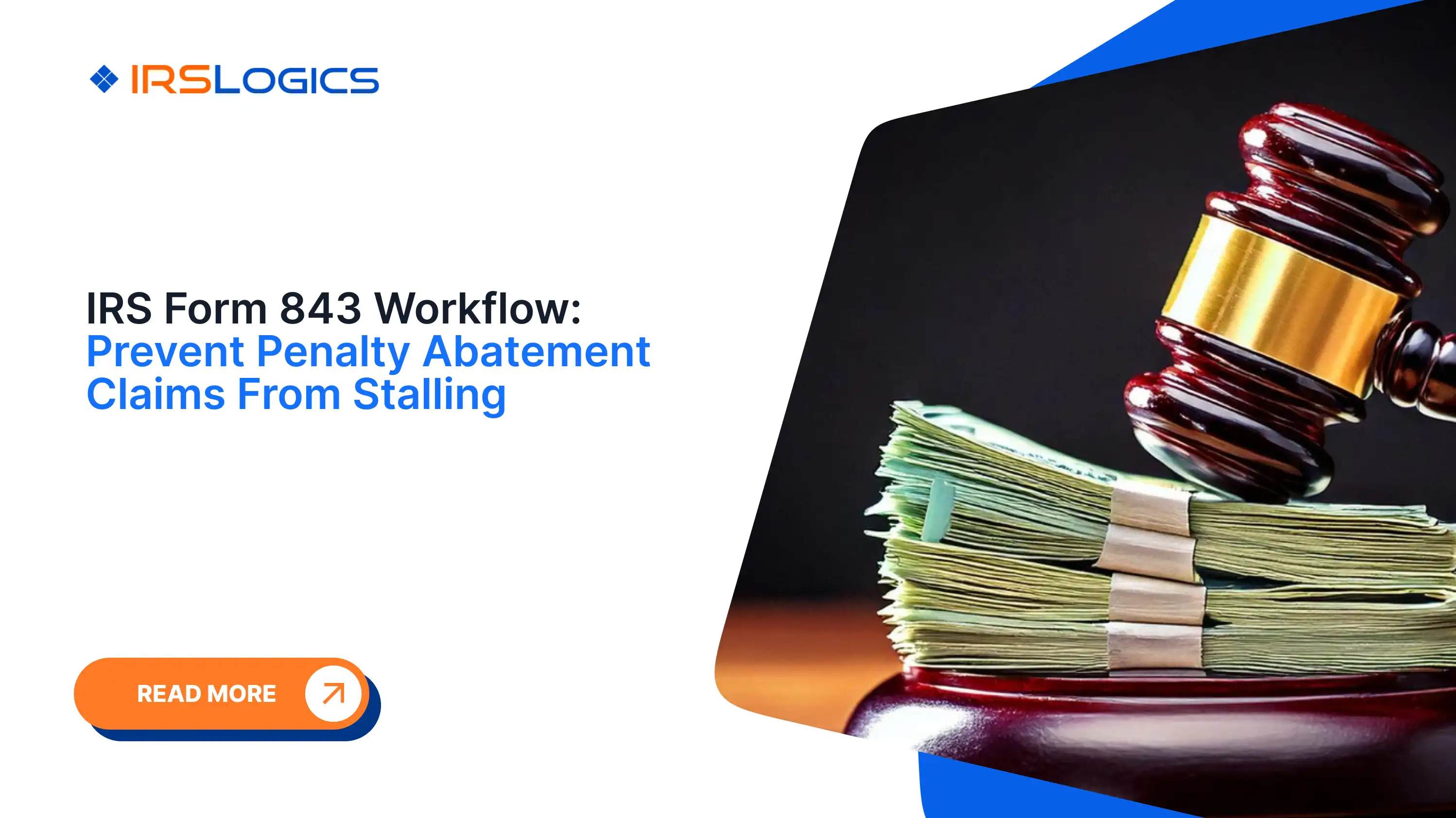
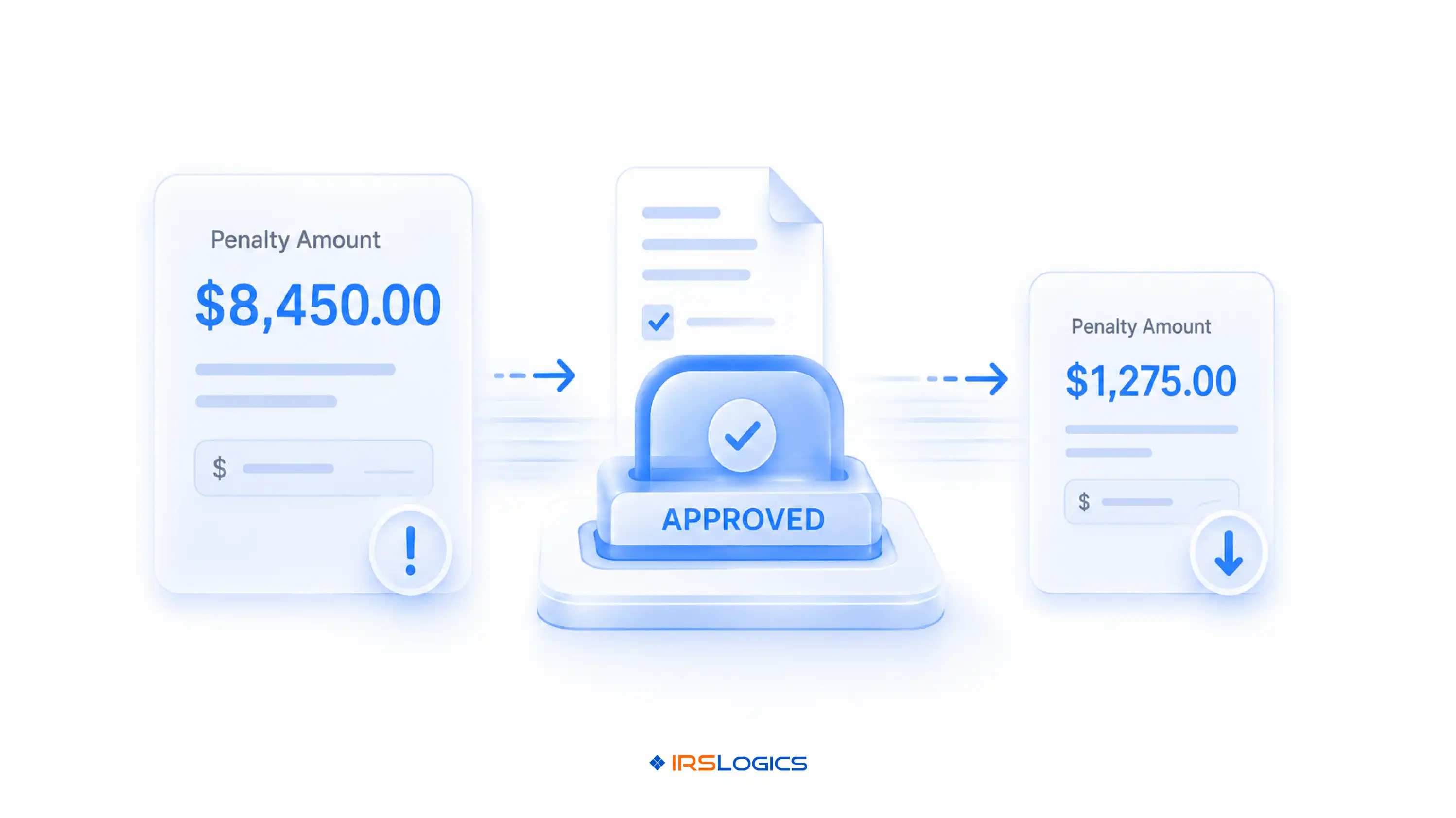
Eight thousand four hundred and twelve dollars. That's the exact number staring back at your client from an IRS penalty notice, on top of a tax bill that already kept them up at night. They didn't miss a filing out of laziness. Their mother was in the hospital for six weeks. And somewhere in your firm's queue right now, there's a version of this exact story sitting half-documented, waiting for someone to finish the fight it deserves. IRS Form 843 is that fight. Handle it right, and thousands of dollars in penalties can disappear. Handle it carelessly, and a case that should have been a win quietly becomes a client who stops returning your calls.
Here's the moment every case manager secretly lives for. A client calls in, braced for bad news, expecting to be told there's nothing left to do but pay. And then you tell them there's actually a lever left to pull. IRS Form 843 exists precisely for this scene, a formal request to abate penalties, interest, or certain taxes that were assessed incorrectly or that deserve relief under specific IRS guidelines.
The stakes feel high because they genuinely are. This isn't a form that shaves a few dollars off a bill. IRS Form 843 can be the difference between a client writing a check for thousands and writing one for almost nothing, sometimes nothing at all, if the reasonable cause argument lands the way it should. That's an enormous amount of weight resting on a document most people have never heard of, which is exactly why treating it casually is such a costly mistake, and exactly the kind of distinction we unpack in what actually separates general IRS software from true resolution software.
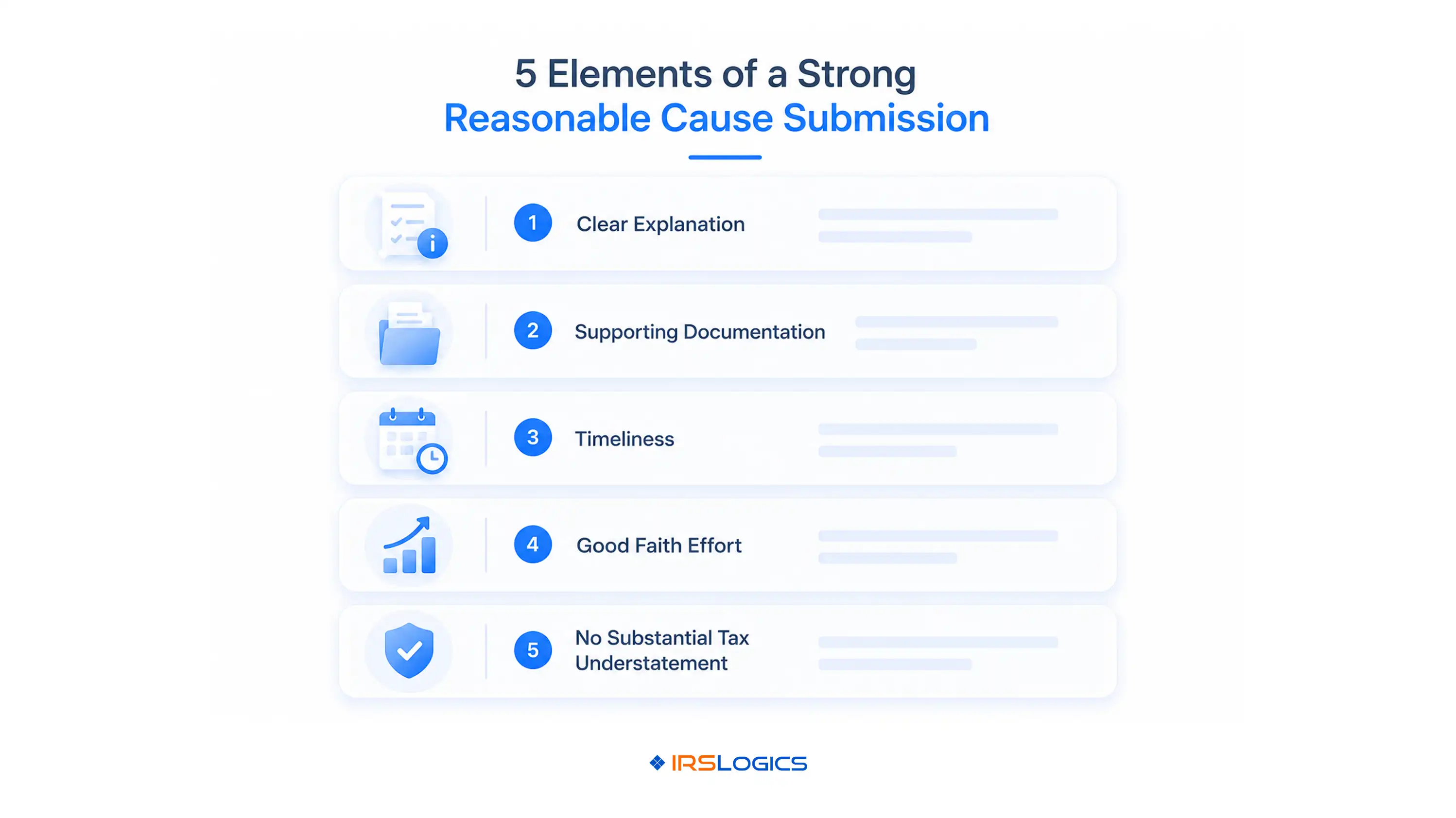
A penalty abatement form doesn't win on sympathy alone. The IRS has heard every excuse imaginable. What actually moves the needle is specificity, evidence, and a story that holds up under scrutiny.
A strong penalty abatement form typically includes:
Skip any one of these, and your penalty abatement form starts to look like the hundred other generic requests sitting in an IRS reviewer's queue that day, the ones that get a quick glance and an automatic denial. The firms that consistently win these cases treat the form less like paperwork and more like a closing argument, because functionally, that's exactly what it is, a mindset we talk more about in our guide on what real tax settlement software should actually deliver.
Here's the plot twist buried in the fine print. IRS Form 843 does double duty, and most people filing it don't even realize it. It's officially titled Claim for Refund and Abatement, and that title covers two related but genuinely different requests.
A claim for refund and abatement can ask the IRS to abate penalties or certain taxes before they've been fully paid, or it can request a refund of penalties or interest a client already paid, if those charges were assessed incorrectly or unfairly in the first place. Which scenario applies changes everything about how the form gets completed and what evidence needs to back it up.
Get this distinction wrong, and a claim for refund and abatement doesn't just slow down. It can bounce right back to your desk because the request doesn't match the circumstances described on the page. A small detail, an oversized consequence.
Here's the twist nobody sees coming. It's almost never the IRS causing the delay. The real bottleneck happens quietly, inside your own office, long before the form ever reaches a mailbox.
A client tells their reasonable cause story over the phone, emotional and detailed, and it gets flattened into three rushed sentences in a case note instead of being documented properly. Supporting evidence gets requested once, the client forgets, and nobody circles back for two more weeks. The form itself sits half completed on someone's desktop because that case manager got pulled onto a fire drill somewhere else, and by the time they return, they've lost the thread of exactly what evidence was already collected and what's still missing.
None of these moments feel dramatic in isolation. Stack them together, and an IRS Form 843 submission that should have taken a week stretches into a month, sometimes longer, while your client sits at home wondering why the firm they hired to fight for them has gone quiet. That kind of drift has a real cost, one worth measuring against actual pricing for tools designed to prevent it in the first place.
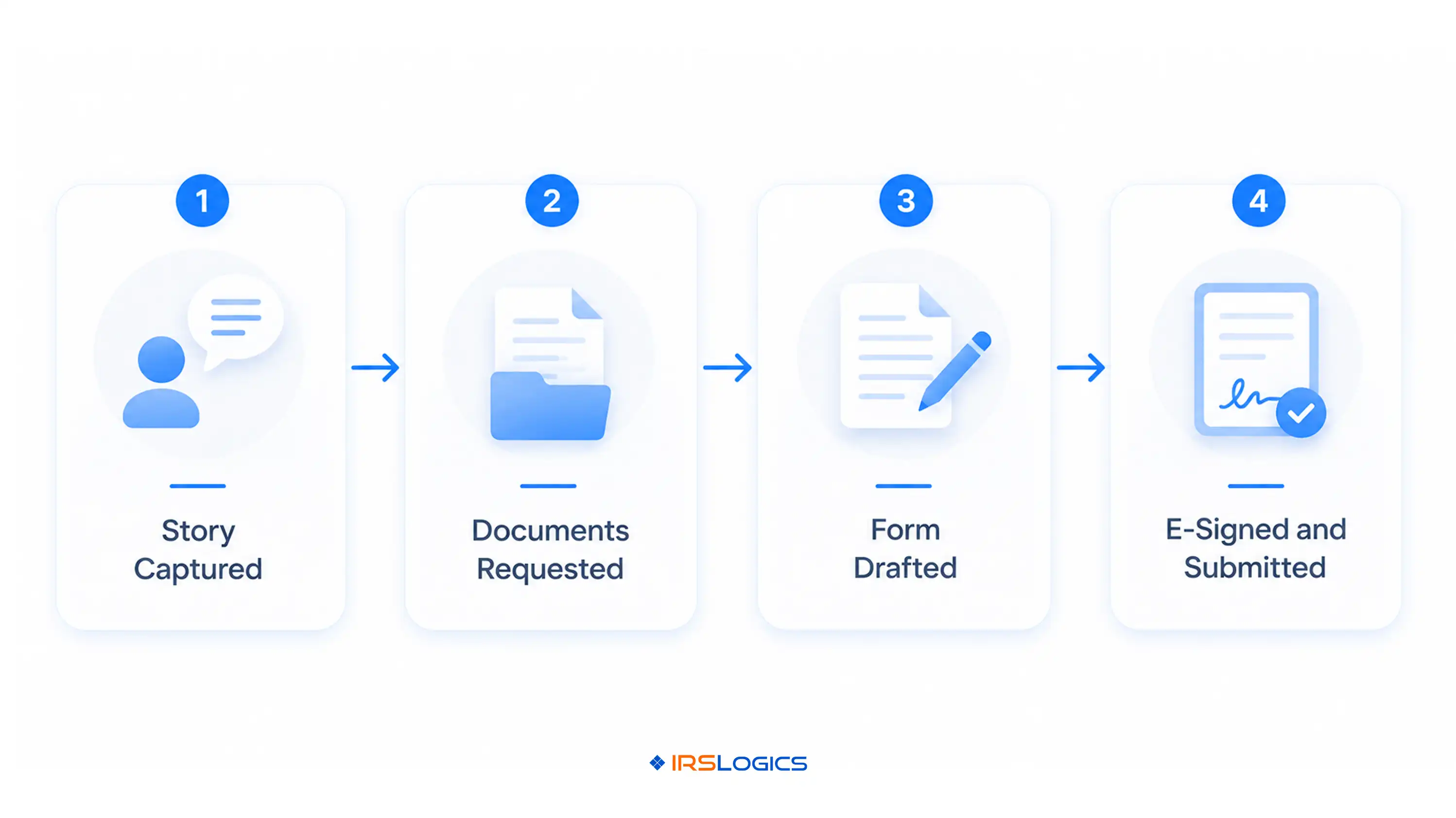
The fix here isn't heroics or late nights. It's structure, the kind that makes sure nothing important is ever waiting silently on someone's memory.
Capture the reasonable cause narrative in full detail during the very first real conversation, while the client is still telling the whole story, not summarizing it days later from a vague recollection. Request supporting documentation immediately, with a specific list of exactly what's needed, instead of a soft "send anything relevant" that leaves the client guessing. Set a firm follow-up trigger if documents don't arrive within a set window, so a missing record doesn't quietly become a silent three-week gap. And once the penalty abatement form is drafted, push it into review promptly, not into a queue behind everything else that felt more urgent that day.
Firms that treat this as a tracked, visible process rather than a favor squeezed between other cases consistently move IRS Form 843 claims from intake to submission faster, and faster submissions almost always translate into faster relief for a client who's been waiting anxiously.
This is where the tension finally breaks. The Forms module keeps IRS Form 843 built directly into the platform, ready to populate from the client's existing case data instead of starting from a blank page every single time. The Financial Questionnaire and Interview tools capture reasonable cause details and financial context right at intake, so the story exists in the case file from day one instead of getting reconstructed from fading memory three weeks later. You can see the mechanics of that intake process in more depth in our piece on pre-filling IRS forms straight from a client questionnaire.
Document Section and File Category keep every piece of supporting evidence organized and attached to the exact case it belongs to, so nothing gets buried in a forgotten email thread or a separate folder nobody remembers exists. Tasks let case managers set follow-up reminders the instant documentation is requested, which means a missing medical record or financial statement gets chased down in days, not weeks. Case Activities logs every step automatically, so if a penalty abatement form ever stalls, it's immediately obvious where and why, instead of the whole team shrugging and guessing. The same discipline applies once a case escalates further, something we get into in our breakdown of what to check before every collection due process filing.
E-Sign lets the completed claim for refund and abatement get signed and finalized without a printer, a scanner, or a client driving across town just to put pen to paper. For firms handling penalty abatement cases regularly, this combination transforms a process that used to live entirely inside one person's memory into something the whole team can see, track, and push forward together. Our full feature set covers everything mentioned here in more depth. If your firm handles a lot of forms like this, our companion guide on collecting business financials for Form 433-B without rework shows how the same principle applies across resolution cases. Curious what all of this looks like on a real case? Book a demo and watch it happen.
IRS Form 843 is used to request abatement of certain penalties, interest, or taxes, or to claim a refund of penalties or interest already paid, based on reasonable cause or other qualifying circumstances.
Reasonable cause typically includes serious illness, natural disasters, a death in the family, or reliance on incorrect professional advice, documented with specific dates and supporting evidence.
Processing time varies, but a well documented claim for refund and abatement submitted with complete evidence generally moves faster than one that triggers follow up requests from the IRS.
Yes, though first-time penalty abatement can sometimes be requested administratively without Form 843 in straightforward cases. Form 843 is typically used for more detailed reasonable cause arguments.
The IRS may request additional information, which delays a decision, or may deny the claim outright if the reasonable cause argument isn't sufficiently supported.
Not automatically. Filing a claim for refund and abatement doesn't halt collection the way a formal hearing request can, so timing and overall case strategy still matter a great deal.
IRS Form 843 carries real weight for clients hoping to shed penalties that feel unfair, excessive, or just plain unjust. The form itself was never the hard part. What complicates things is everything that happens, or quietly fails to happen, before it gets submitted. Build a workflow that captures the story while it's still fresh, chases documentation the moment it's needed, and keeps every single claim visible to the whole team, and penalty relief stops depending on luck. It starts depending on process, and process wins far more often than luck ever does.
Ready to stop letting penalty abatement claims stall in your queue? Talk to our team and see how IRS Logics keeps every IRS Form 843 case moving from intake to submission.
All
Tax Software
Workflow & Automation
Industry News
Resolution Tips
Tax Resolution Marketing

Lorem ipsum dolor sit amet, consectetur adipiscing elit. Suspendisse varius enim in eros elementum tristique. Duis cursus, mi quis viverra ornare, eros dolor interdum nulla, ut commodo diam libero vitae erat. Aenean faucibus nibh et justo cursus id rutrum lorem imperdiet. Nunc ut sem vitae risus tristique posuere.


Share this article directly by email. Simply enter the recipient’s details below.

Article has been send to you.