Tax Software


If your team is great at solving IRS problems but still feels buried, the issue is rarely effort. It is usually visibility, ownership, and follow-through.
That is where most firms get stuck. They buy accounting practice management software to run the firm, then try to stretch it to handle IRS representation work. Or they buy tax resolution software, but still lack a firm-wide system for deadlines, capacity, and service delivery.
This guide breaks down what each tool is designed to do, where they overlap, and how to choose what you actually need based on how your firm works.
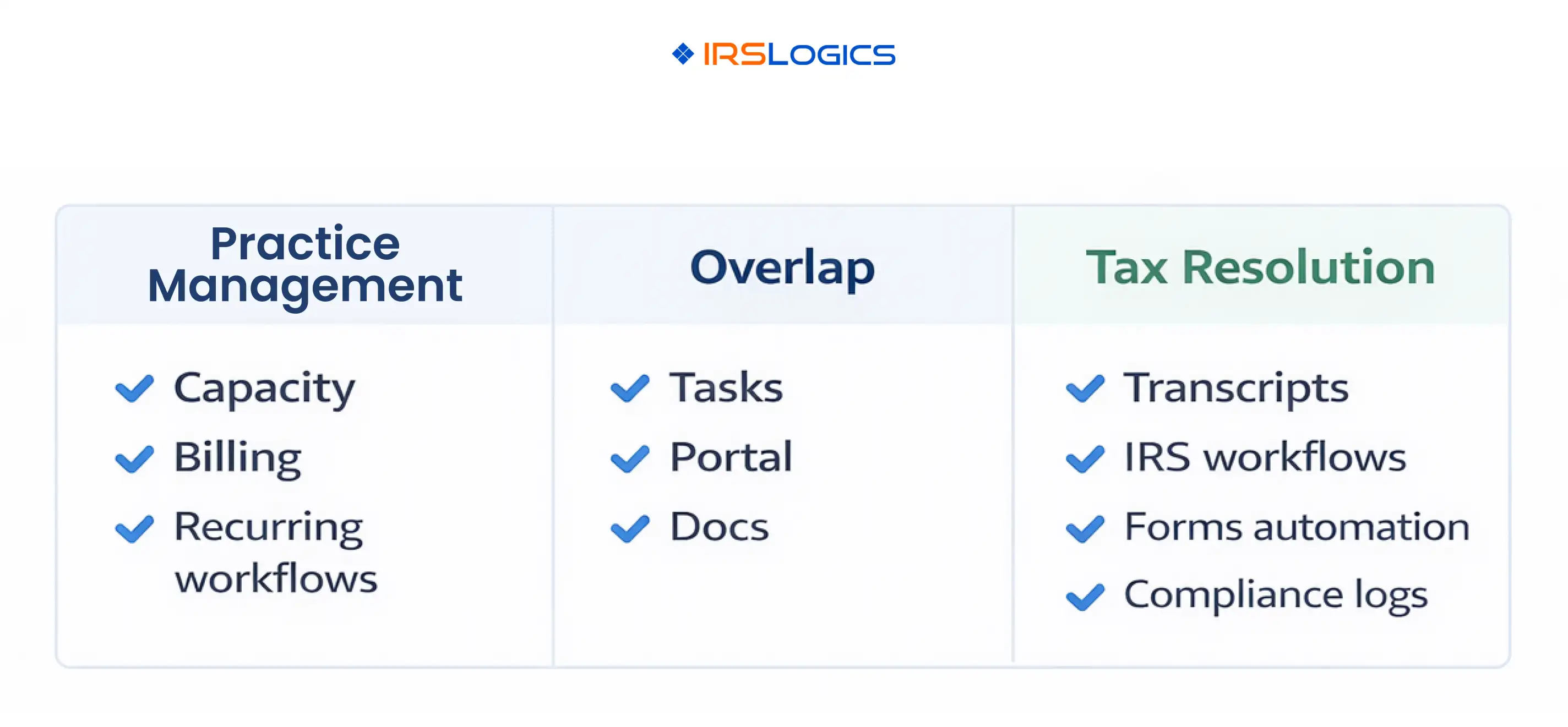
Accounting practice management software helps you run the practice. It is built to manage work across clients, team members, services, and deadlines, end to end.
Tax resolution software helps you run IRS representation cases. It is built for long-cycle controversy work like notices, audits, collections, offers in compromise, installment agreements, and ongoing monitoring, with tax-specific workflows, forms, transcripts, and case status tracking.
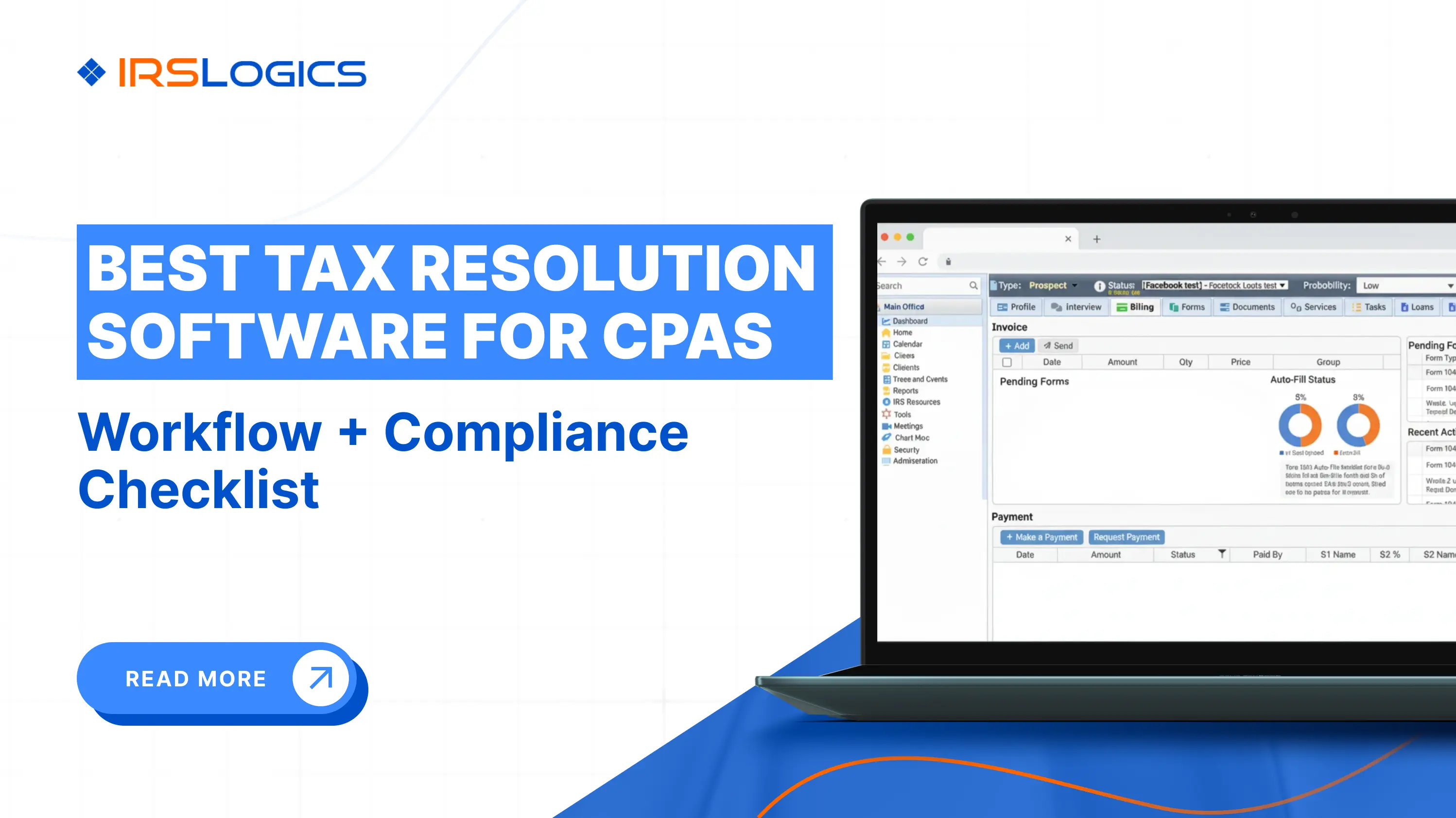
Accounting practice management software is typically designed to streamline front-office and back-office operations, manage client work end to end, and help teams collaborate and track progress across current and upcoming work.
In real terms, most practice management platforms focus on:
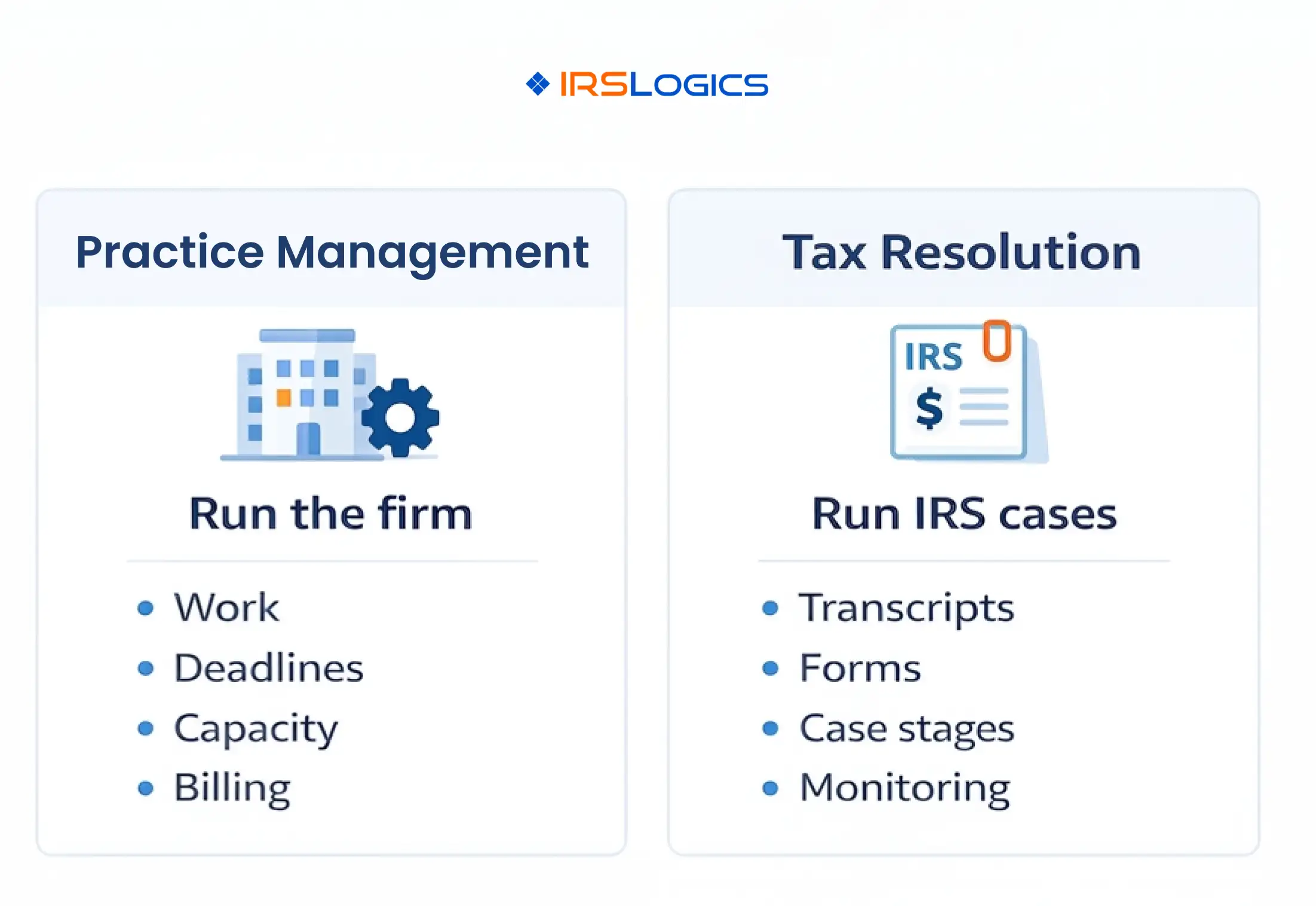
Recurring work templates, tasks, due dates, and visibility across the team.
Portals, document collection, e-signatures, and communication tied to jobs or engagements.
Time tracking, invoicing, realization, and performance reporting.
Capacity planning, assignments, and standardized processes across services.
You will see many vendors position practice management as the operational layer that brings your “mission-critical functions” into one place, centered around clients, workflow, documents, and billing.
Tax resolution software is built for what happens after the return. It focuses on IRS and state representation work, where cases require specialized documentation, workflows, deadlines, and proof of diligence.
A true tax resolution platform typically includes:
Structured stages and tasks so you can run cases consistently, not from memory.
Fast transcript pulls and ongoing updates so your data stays current and your team catches changes early.
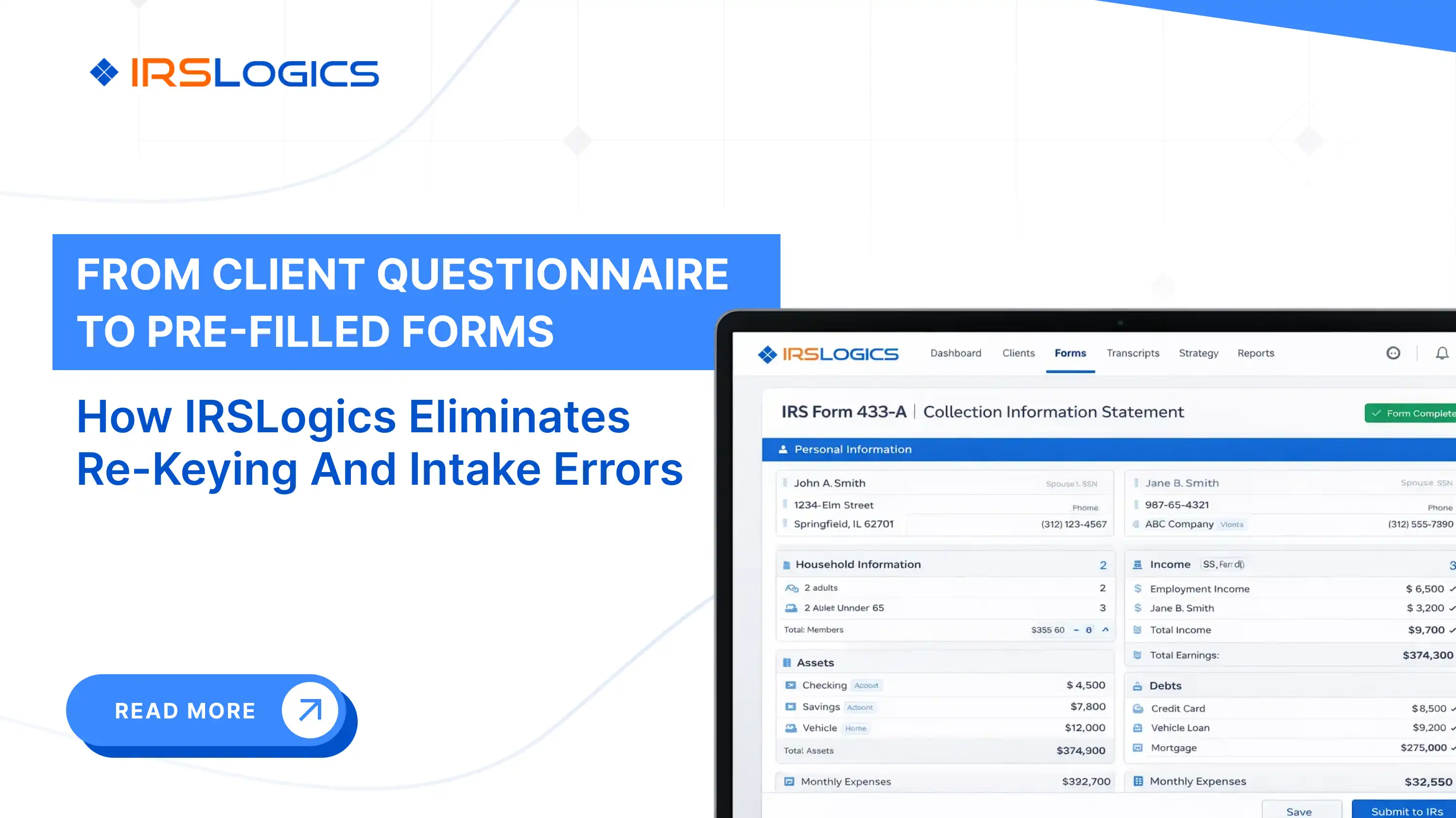
Auto-filled IRS forms, resolution checklists, and repeatable workflows tied to each case type.
Case status updates clients can see, plus activity logs for operational control and compliance.
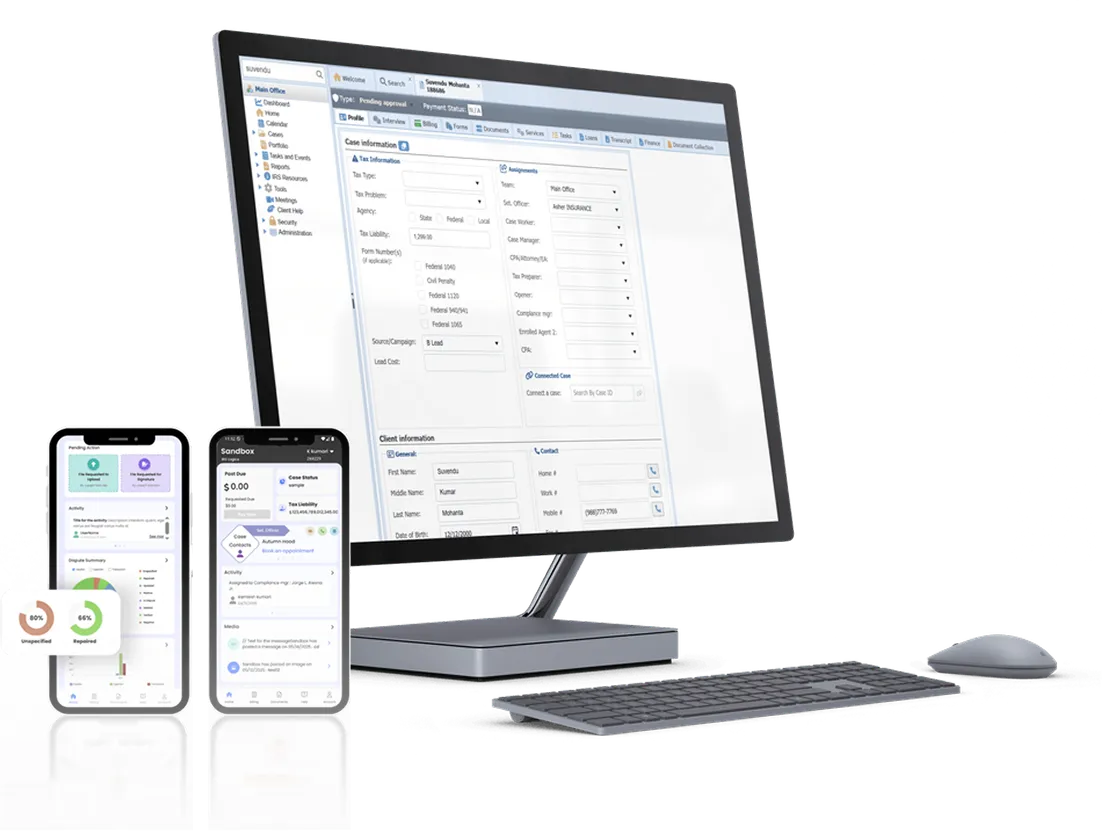
For example, IRSLogics positions its tax resolution software around case management, workflow automation, IRS transcript pulls, client portal updates, billing, and exportable reporting, all tied to resolution work.
This is why many tax resolution-focused vendors emphasize resolution-first workflows like transcript tools, case management, integrated forms, and step-by-step guidance.
You likely need accounting practice management software first, because the biggest wins come from standardizing recurring delivery, deadlines, document collection, and billing across the whole client base.
Add tax resolution software only if controversy work is becoming a meaningful, repeatable service line.
This is the danger zone. A general practice management system can track tasks, but tax resolution work has more moving parts, more follow-ups, more evidence needs, and more long-cycle case management requirements.
If you want to grow this line of business without adding chaos, tax resolution software becomes the layer that makes the work consistent.
If tax resolution is central to your firm, tax resolution software is non-negotiable. You need transcripts, resolution workflows, case status tracking, billing tied to cases, and reporting that shows pipeline and workload in real time.
Accounting practice management software may still matter, but it becomes secondary to the system that actually runs the IRS case operation.
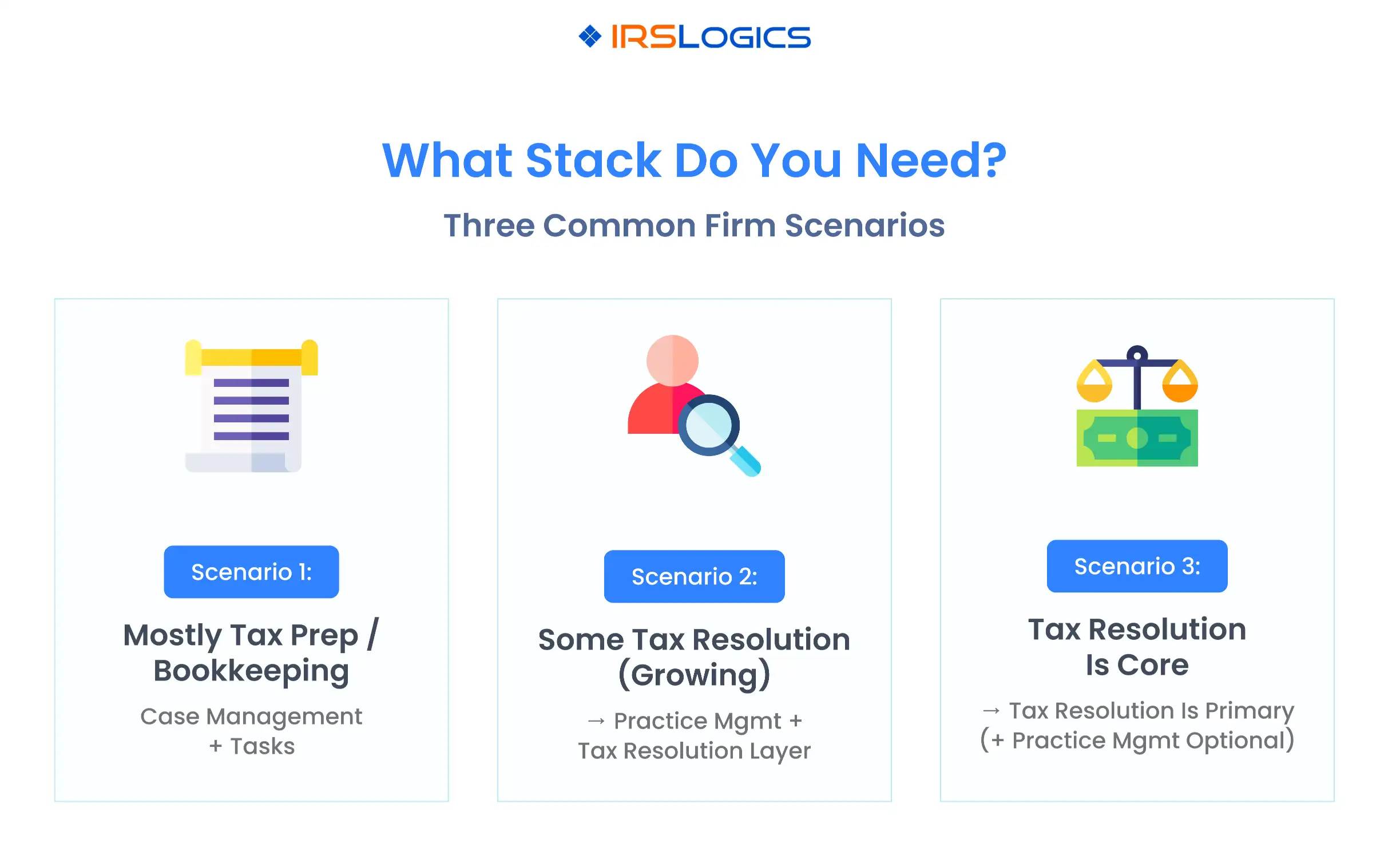
Many firms do both compliance work and representation work. In that case, the cleanest approach is usually:
Layer 1: Practice Management For Firm-Wide Delivery
Use it for recurring engagements, time and billing, capacity, and service delivery across departments.
Layer 2: Tax Resolution Software For IRS Case Delivery
Use it for everything case-based, including workflows, transcripts, forms, portal updates, and resolution reporting.
What to avoid is forcing one tool to do both jobs poorly. That is how teams end up with duplicate data, inconsistent case notes, and missed follow-ups.
It is software designed to help accounting and tax firms manage and streamline operations, track client work end to end, and support collaboration across teams and clients.
It is software designed for IRS representation work, including case workflows, transcripts, integrated forms, case tracking, billing, and client communication tied to resolution cases.
Not reliably if you do real volume in resolution. Practice management tools can track jobs and tasks, but tax resolution requires tax-specific workflows, transcripts, forms automation, and case-centric reporting that general systems usually lack.
If you run a full-service firm with both recurring compliance work and ongoing IRS case work, many teams use practice management for firm delivery and tax resolution software for controversy delivery.
Workflows that match IRS case stages, transcript automation and monitoring, forms automation, client portal updates, and dashboards that show pipeline, workload, and case health.
IRSLogics is positioned as tax resolution software built for resolution firms, CPAs, EAs, and tax attorneys, with case workflows, transcripts, client portal updates, billing, and reporting focused on IRS case operations.
Accounting practice management software and tax resolution software solve different problems, even though they can look similar on a features list.
If you choose based on what your firm actually does day to day, you will avoid the common trap of paying for tools that create overlap but not clarity.
Key takeaways:
All
Tax Software
Workflow & Automation
Industry News
Resolution Tips
Tax Resolution Marketing
Lorem ipsum dolor sit amet, consectetur adipiscing elit. Suspendisse varius enim in eros elementum tristique. Duis cursus, mi quis viverra ornare, eros dolor interdum nulla, ut commodo diam libero vitae erat. Aenean faucibus nibh et justo cursus id rutrum lorem imperdiet. Nunc ut sem vitae risus tristique posuere.


Share this article directly by email. Simply enter the recipient’s details below.

Article has been send to you.