Workflow & Automation


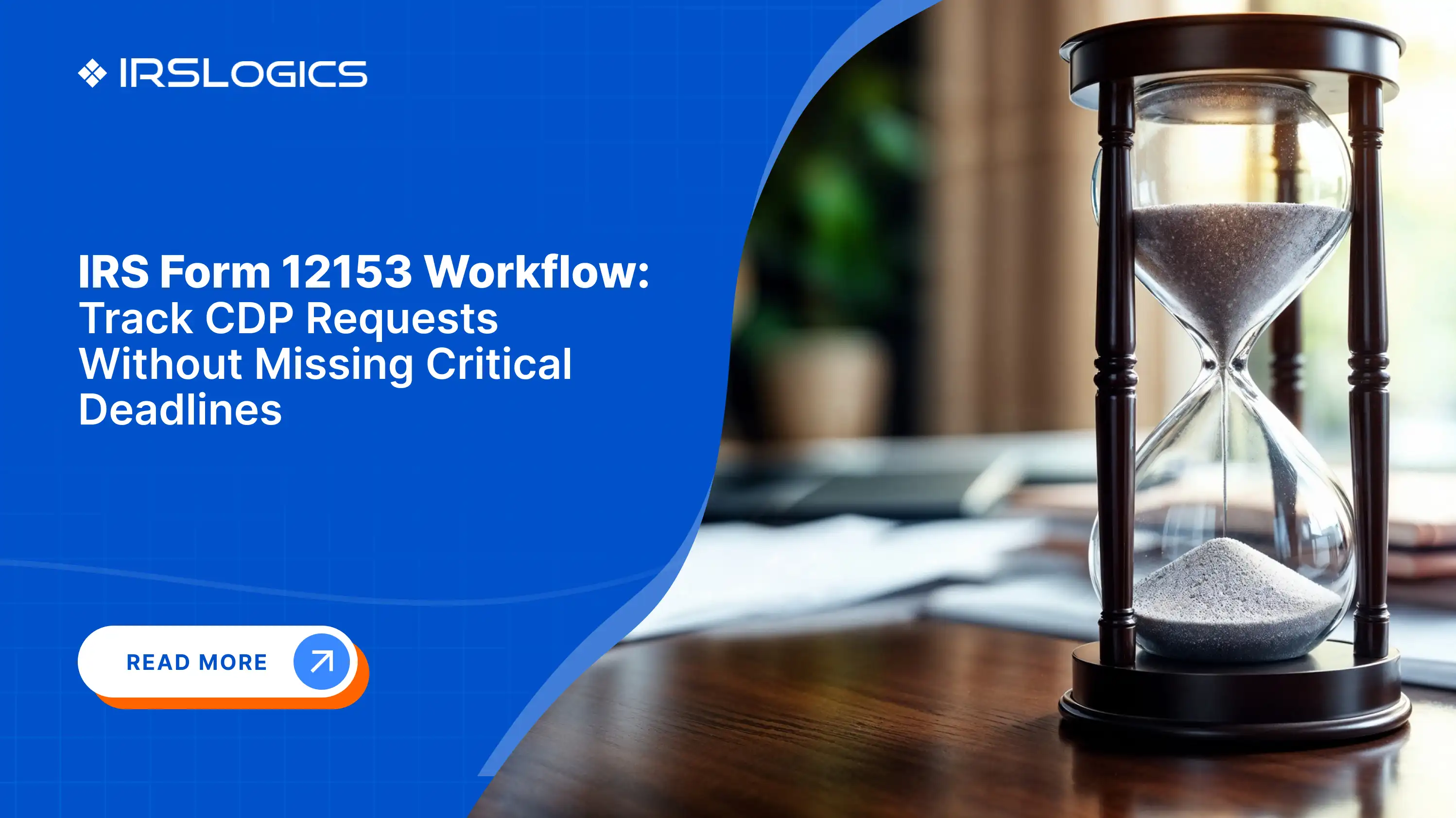
Thirty days. That's it. That's the entire window your client has to file IRS Form 12153 after a Notice of Federal Tax Lien or a Final Notice of Intent to Levy shows up in their mailbox. Miss it by even a day, and the right to a collection due process hearing quietly disappears, along with your client's best shot at slowing the IRS down. This is the kind of deadline that keeps case managers checking their calendars twice.
Here's the scene that plays out more often than firms like to admit. A client finally opens that intimidating envelope from the IRS, three weeks after it arrived, because who wants to open IRS mail immediately? By the time they call your office, panicked, the thirty-day window is already half gone, and now everyone's racing against a clock that started ticking without them.
IRS Form 12153 is the Request for a Collection Due Process or Equivalent Hearing. Filing it is how a taxpayer formally challenges an IRS collection action, whether that's a lien or a levy, and requests a hearing before an independent IRS Office of Appeals officer. Get IRS Form 12153 filed on time, and collection activity typically pauses while the hearing plays out. Miss that window, and the IRS can move forward with collection while your client watches from the sidelines with far fewer options. This is exactly the kind of high-stakes deadline the firms on our about page are built to handle without panic.
Two specific notices trigger this countdown, and knowing the difference matters more than people expect.
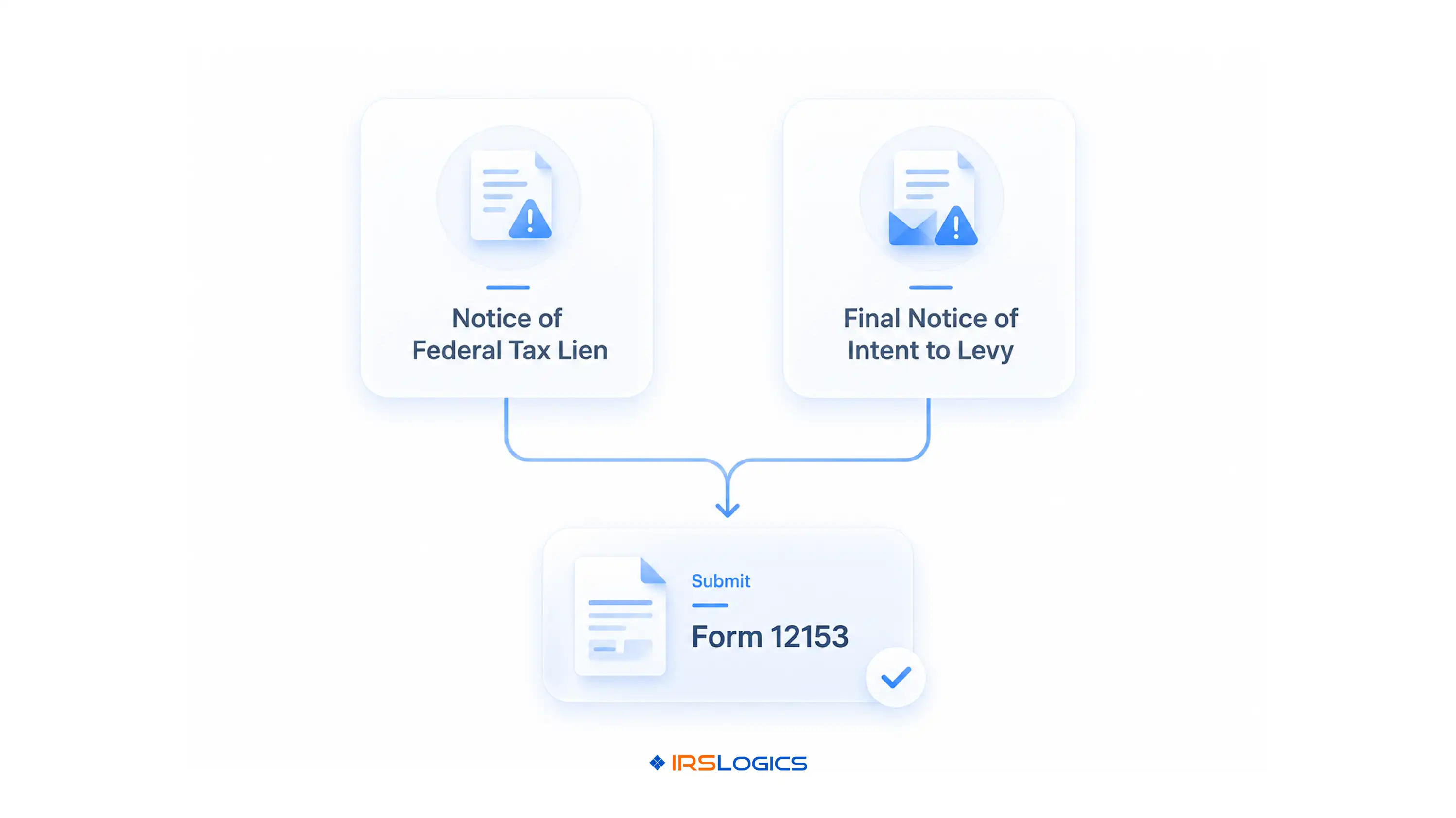
A Notice of Federal Tax Lien Filing gives the taxpayer thirty days from the filing date to request a hearing using IRS Form 12153. A Final Notice of Intent to Levy gives thirty days from the date of that notice as well, but this one carries even more urgency, since a levy means the IRS can begin seizing wages, bank accounts, or other assets once that window closes.
Both paths lead to the same form and the same underlying right, a collection due process hearing where an appeals officer reviews the case independently from the collection division that issued the notice in the first place. The trigger date is everything here. Miscalculate it by even a few days, and the entire strategy shifts from "let's slow this down" to "let's manage the damage." Our FAQ page covers a few more of the edge cases firms run into around this exact calculation.
Once IRS Form 12153 is filed correctly and on time, the case moves to an appeals officer who wasn't involved in the original collection decision. This is genuinely one of the more useful protections built into the system, a fresh set of eyes reviewing whether collection is appropriate, or whether an alternative resolution makes more sense.
During a collection due process hearing, taxpayers can raise a range of issues. They can propose a collection alternative like an installment agreement or an Offer in Compromise. They can challenge whether proper procedures were followed. In some cases, they can even dispute the underlying tax liability itself, if they never had a prior opportunity to do so. The hearing officer weighs all of this before deciding whether the lien or levy action should proceed, get modified, or get withdrawn entirely.
For your client, a collection due process hearing isn't just a formality. It's often the single most effective brake available before collection activity accelerates into something much harder to reverse. Our piece on what a proper tax CRM should track for resolution work covers more on documenting hearings like this properly.
Nobody misses a CDP request deadline on purpose. It happens in the gaps, the places where information exists but nobody's watching it closely enough.
Sometimes the client sits on the notice before calling the firm, and by the time intake happens, the countdown is already dangerously short. Sometimes the notice gets logged into a case file, but nobody calculates the actual response date, so it just sits there looking like any other piece of paperwork. Sometimes a case manager is juggling several deadlines at once, and a CDP request quietly slips a few spots down the priority list until it's suddenly too late to matter.
The common thread across every missed CDP request isn't incompetence. It's visibility. Nobody flagged the deadline clearly enough, early enough, for someone to act on it in time.
The fix here isn't heroics. It's structure. A reliable IRS Form 12153 workflow removes the guesswork from a process that has zero room for error.
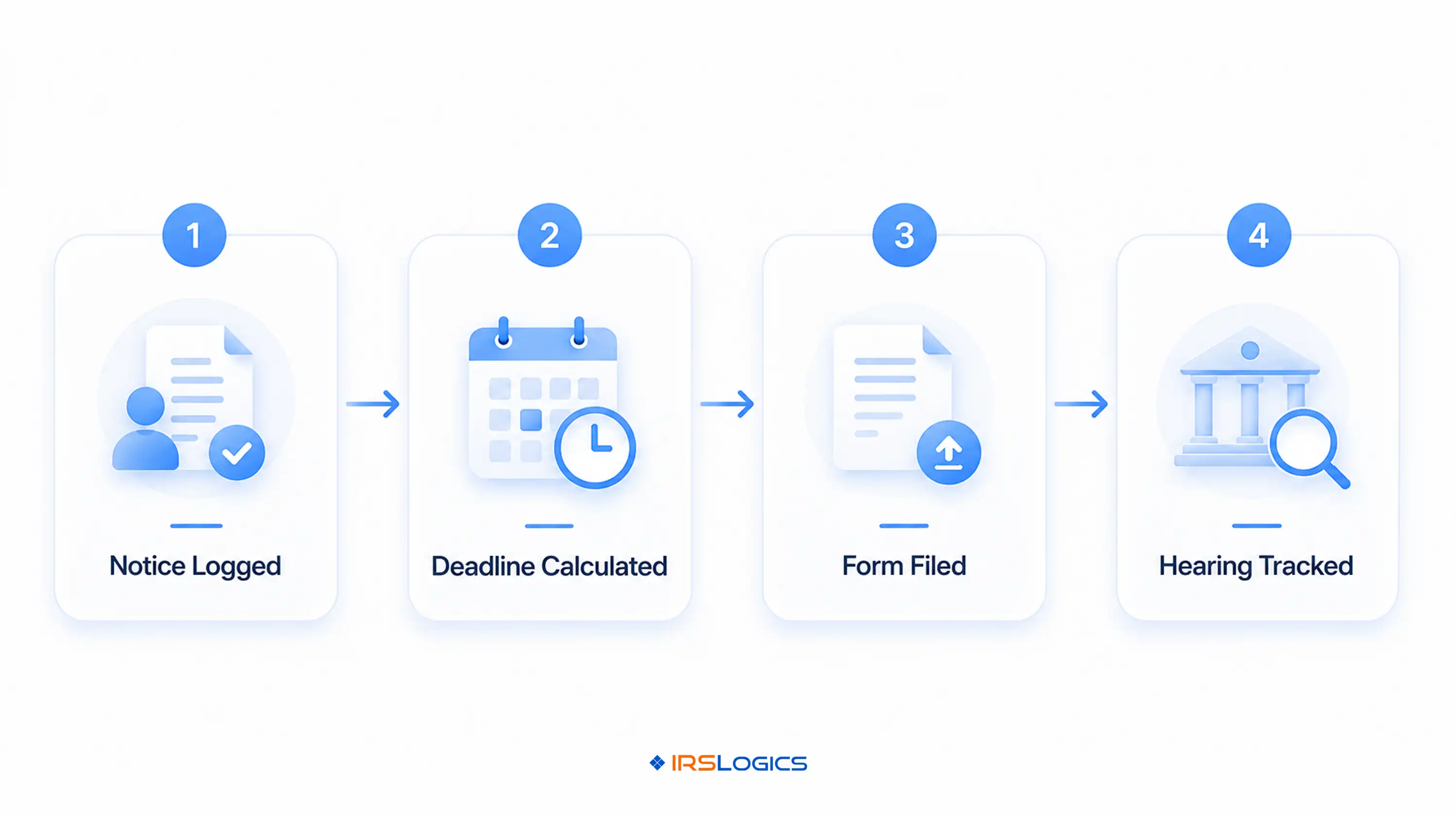
Start by logging the notice the moment it enters the case file, not after the intake call ends and someone gets around to it. Calculate the exact filing deadline immediately, thirty days from the notice date, and make that deadline visible to everyone touching the case, not just the person who opened the mail. Build in reminders well before the deadline, not the day it's due, since same-day scrambling leaves zero margin for a signature issue or a missing detail on the form.
Once IRS Form 12153 is filed, the workflow isn't over. Track the case through the collection due process hearing itself, documenting every communication with the appeals officer, so nothing depends on someone's memory of a call from six weeks ago. A CDP request that gets filed on time but then poorly tracked afterward can still lead to missed follow-ups and weaker outcomes. Our blog has more on building deadline-proof processes like this one across other IRS workflows too.
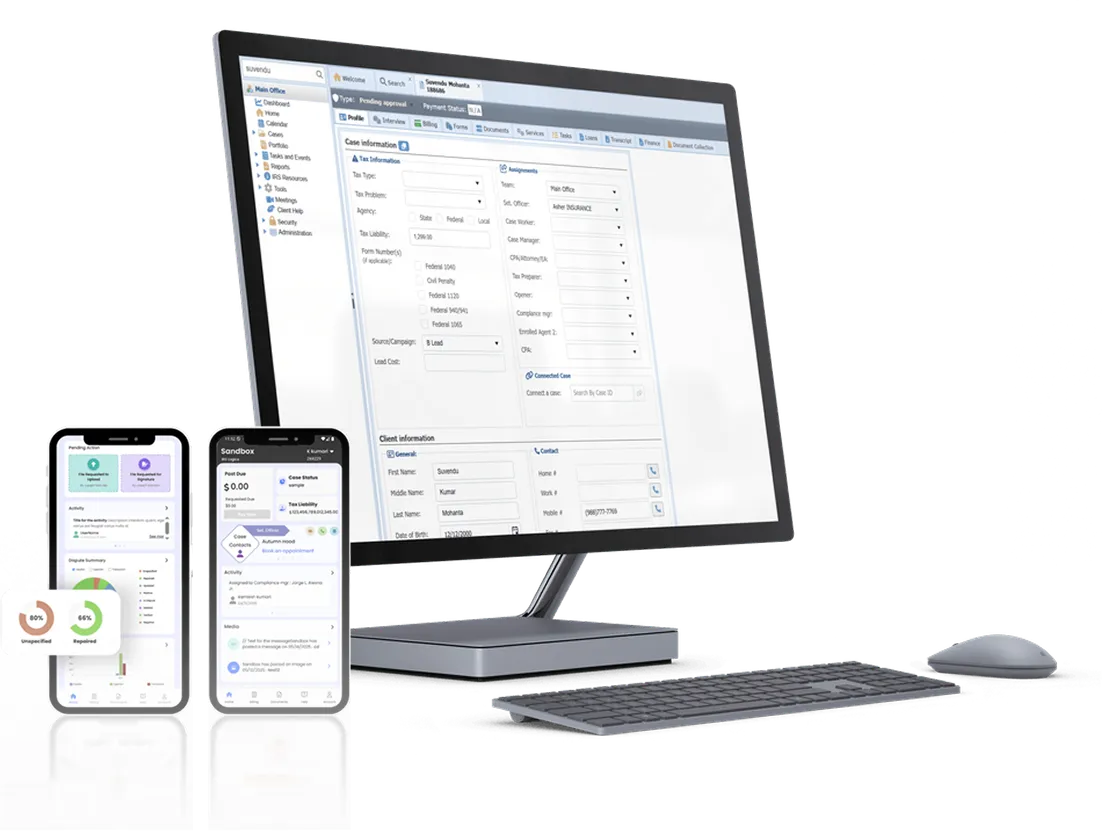
This is where the tension finally eases. The Tasks module lets case managers log the notice and set the filing deadline the moment a lien or levy notice enters a case, with reminders scheduled well ahead of the thirty day cutoff, not on the day it expires. Case Activities tracks every action taken from that point forward, which means the entire history of a CDP request, from filing to hearing to resolution, lives in one place instead of scattered across emails and sticky notes. You can see how this connects to broader deadline management in our piece on how IRS notice tracking software prevents missed deadlines.
The Document Section keeps the completed IRS Form 12153, supporting documentation, and any correspondence with the appeals officer organized inside the same case record your whole team can access. Case Status can be customized to reflect exactly where a CDP request stands, whether that's "Notice Received," "Form Filed," or "Hearing Scheduled," so nobody has to ask around to know what's happening. If you want to see how this fits alongside your firm's broader workflow, our features overview and pricing page lay out exactly what's included.
None of this changes the underlying deadline. Thirty days is still thirty days. What changes is whether your firm sees that clock ticking clearly enough to act before it runs out. Curious what this looks like on a real case? Book a demo and walk through the workflow yourself.
IRS Form 12153 is used to formally request a collection due process or equivalent hearing after receiving a Notice of Federal Tax Lien or a Final Notice of Intent to Levy.
Generally thirty days from the date of the lien notice or the intent to levy notice. Missing this window typically forfeits the right to a full collection due process hearing.
Taxpayers can propose collection alternatives, challenge procedural errors, and in some cases dispute the underlying tax liability if they never had a prior chance to contest it.
The taxpayer may still be eligible for an equivalent hearing in some cases, but it comes with fewer protections and does not pause IRS collection activity the way a timely CDP request does.
In most cases, yes. A timely filed CDP request generally suspends collection action, including levies, while the hearing process plays out.
By logging the triggering notice immediately, calculating the exact deadline right away, and setting reminders well before the thirty day window closes, not on the final day.
A collection due process hearing exists to give taxpayers a real shot at slowing down aggressive IRS collection. That protection only works if IRS Form 12153 gets filed inside a window that closes fast and doesn't bend for good excuses. Build a workflow that catches the deadline early, and that thirty day countdown stops being a source of dread and starts being just another step your firm handles calmly, every single time.
Ready to stop racing thirty day deadlines without a safety net? Talk to our team and see how IRS Logics keeps every CDP request visible from notice to hearing.
All
Tax Software
Workflow & Automation
Industry News
Resolution Tips
Tax Resolution Marketing
Lorem ipsum dolor sit amet, consectetur adipiscing elit. Suspendisse varius enim in eros elementum tristique. Duis cursus, mi quis viverra ornare, eros dolor interdum nulla, ut commodo diam libero vitae erat. Aenean faucibus nibh et justo cursus id rutrum lorem imperdiet. Nunc ut sem vitae risus tristique posuere.


Share this article directly by email. Simply enter the recipient’s details below.

Article has been send to you.