Resolution Tips


The demand for tax resolution services has never been greater. As IRS enforcement activities increase and taxpayers face higher levels of financial stress, firms are seeing more clients seeking help with audits, tax debt, collection notices, and relief programs. But as case volume grows, many firms struggle to keep up due to manual processes, inconsistent workflows, and limited staff. What worked for a handful of cases quickly falls apart when handling dozens or hundreds each month. This is where scalability becomes essential. A scalable tax resolution program allows your firm to handle more cases, reduce costs, improve accuracy, and deliver a higher-quality client experience all without overwhelming your team.
In this guide, we break down exactly how to build a scalable tax resolution program that supports long-term growth.
Tax resolution programs refer to the services tax professionals use to help clients solve IRS or state tax debt issues. These programs involve guiding taxpayers through relief and negotiation processes to reduce, manage, or eliminate their outstanding obligations. The core elements typically include tax debt relief, strategic tax debt management, and negotiations with IRS collection officers or automated systems. Firms may handle a variety of resolution cases, such as Offers in Compromise (OIC), Installment Agreements (IA), Penalty Abatement requests, and Currently Not Collectible (CNC) status determinations. Each of these programs requires precise documentation, accurate financial analysis, IRS transcript review, and ongoing communication. Understanding each resolution option clearly is the first step to creating a scalable system that can handle them efficiently.
Tax resolution firms today face a perfect storm of increased IRS activity and rising consumer demand. The IRS is expanding its enforcement departments, hiring thousands of new agents, and upgrading its technology to pursue unpaid taxes more aggressively. At the same time, economic challenges such as inflation, job instability, and rising expenses have pushed more taxpayers into debt and collection issues. As a firm grows, manual case handling becomes a major barrier, causing delays, inconsistencies, and frustrated clients. Scaling is no longer optional; it is a business necessity in order to stay competitive, profitable, and efficient. Scalable systems allow firms to reduce administrative tasks, accelerate case progress, and maintain accuracy even as your client base grows. For firms that want predictable revenue and manageable workloads, scalability is the key to long-term success.
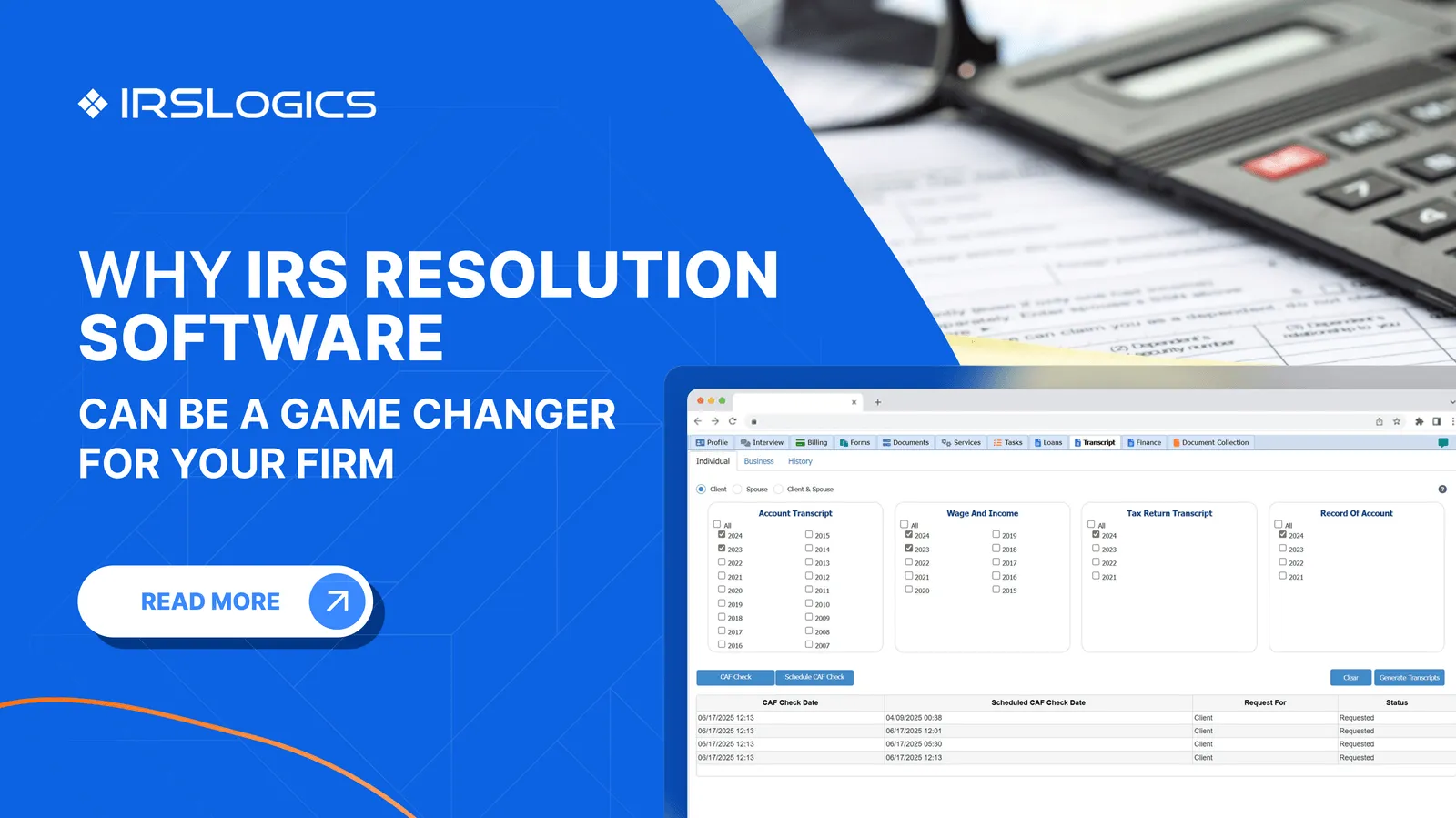
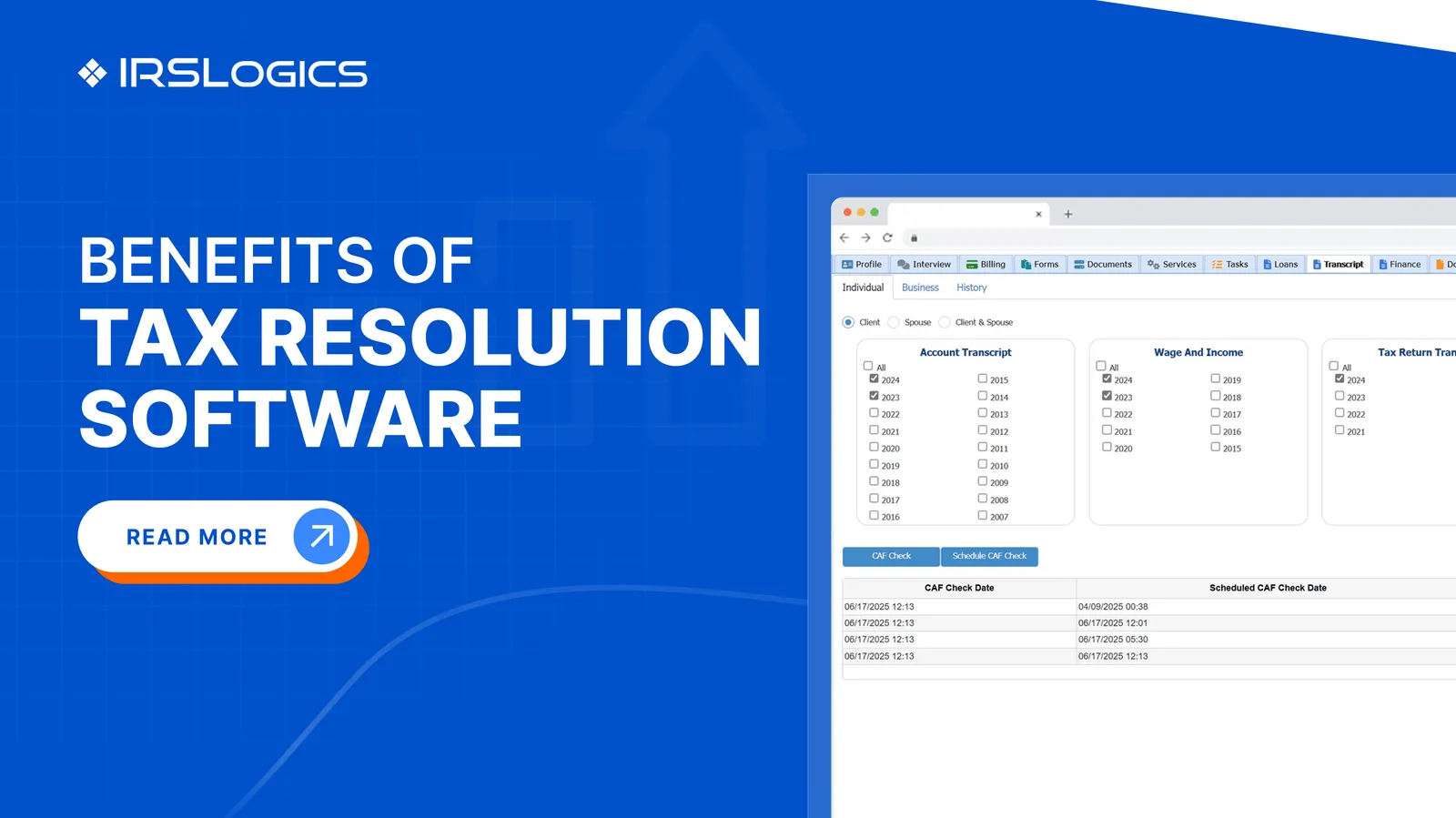
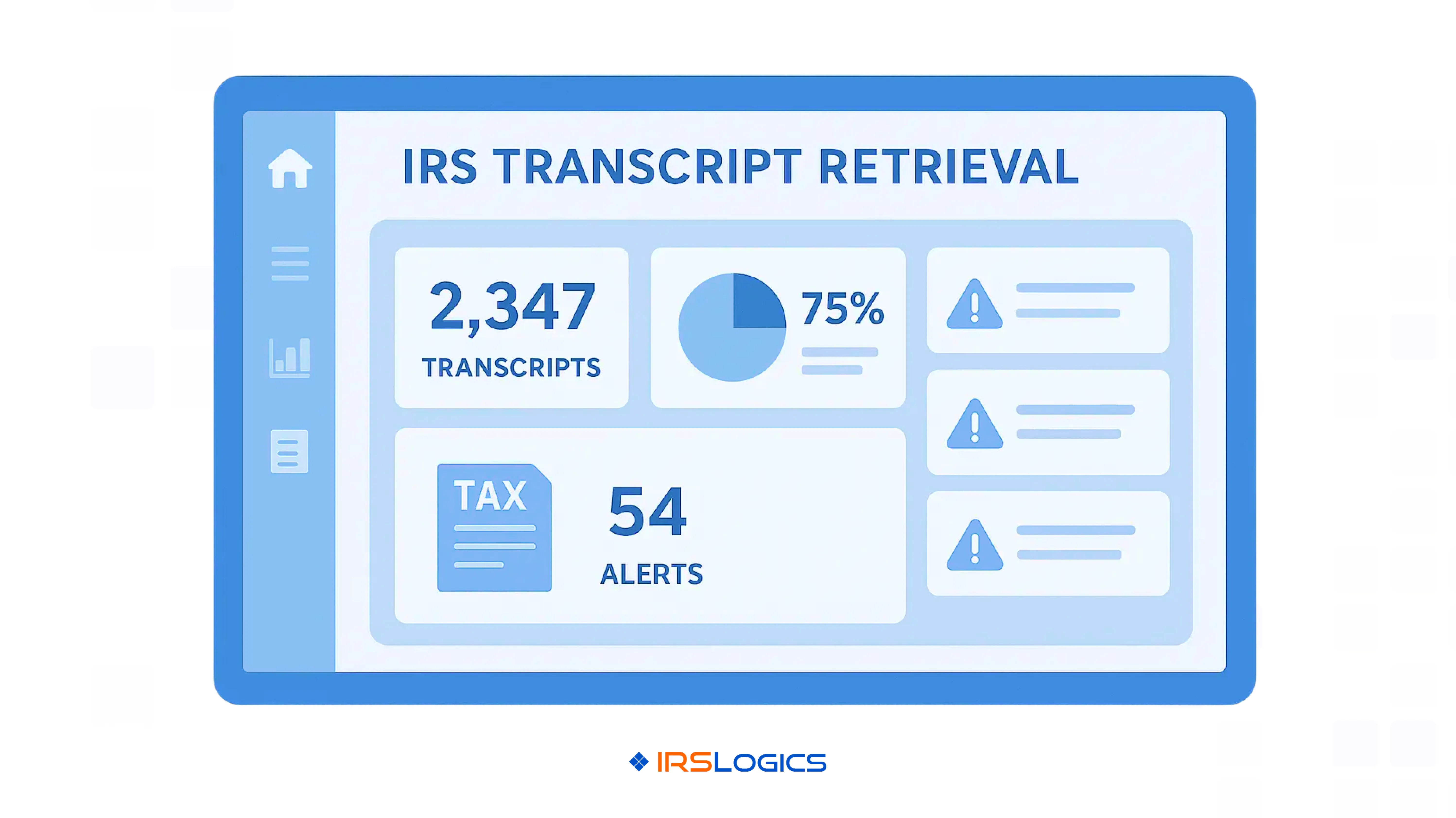
A scalable tax resolution program begins with structure. The first step is streamlining your client intake and documentation processes. Instead of relying on emails and paper forms, firms should adopt standardized questionnaires, digital upload tools, and automated document requests. This ensures every client begins with a complete and organized file. Next, automating IRS transcript retrieval helps eliminate hours of manual downloading and parsing, giving your team quick insight into compliance history, balances due, and wage or bank levy risks. Establishing structured workflows is equally critical. When your team follows a consistent process such as intake, document collection, transcript review, financial analysis, form preparation, negotiations, and resolution it becomes easier to train staff and maintain quality across all cases. A scalable program also requires properly trained professionals, standardized procedures, and a clear internal knowledge base. These elements together create a reliable foundation for growth.
Technology is often the turning point between a firm that struggles with volume and one that thrives. Modern tax resolution software fundamentally transforms operations by centralizing data, automating tedious tasks, and maintaining case consistency. With the right platform, firms can integrate tax relief workflows, payment systems, and secure document management into one unified solution. Automation handles repetitive tasks such as document requests, reminders, financial calculations, and IRS form preparation. Tracking tools help monitor case movement, while analytics reveal opportunities for improvement. The automation of client communication such as updates, alerts, and appointment reminders reduces time spent on follow-ups. Technology replaces the need for multiple disconnected tools and gives your firm a scalable foundation that improves both efficiency and client satisfaction.
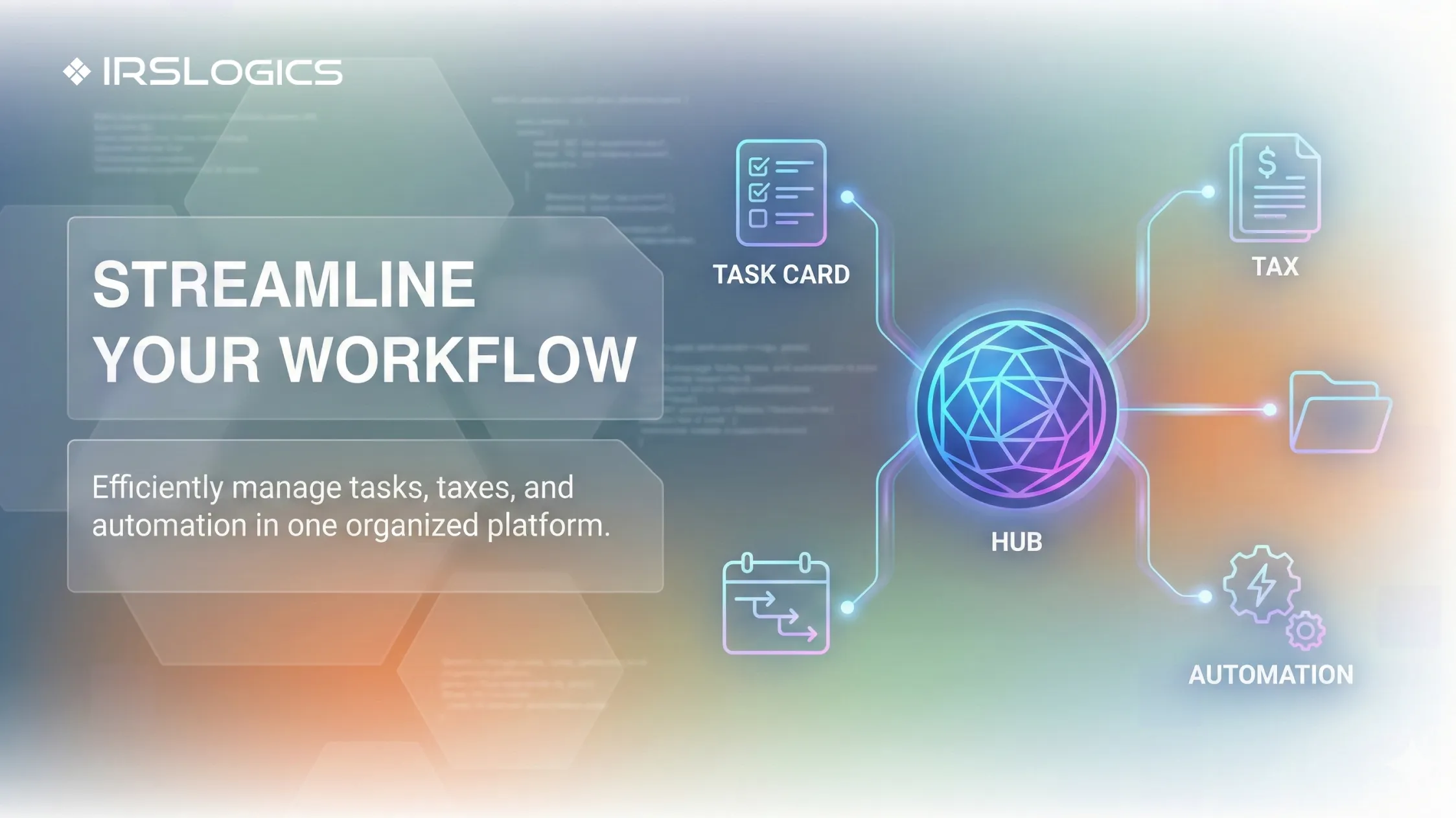
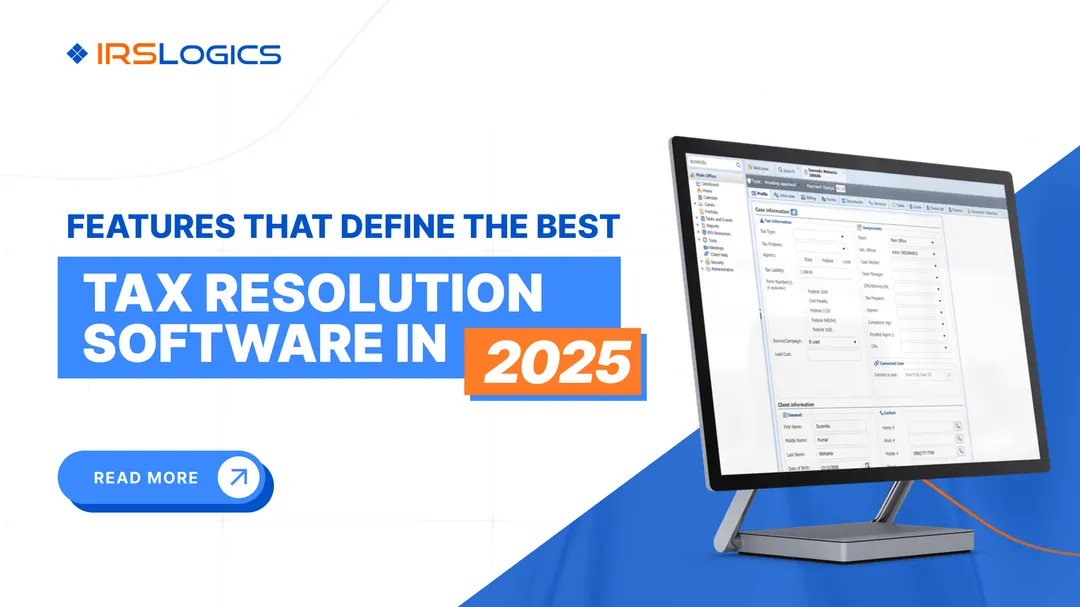
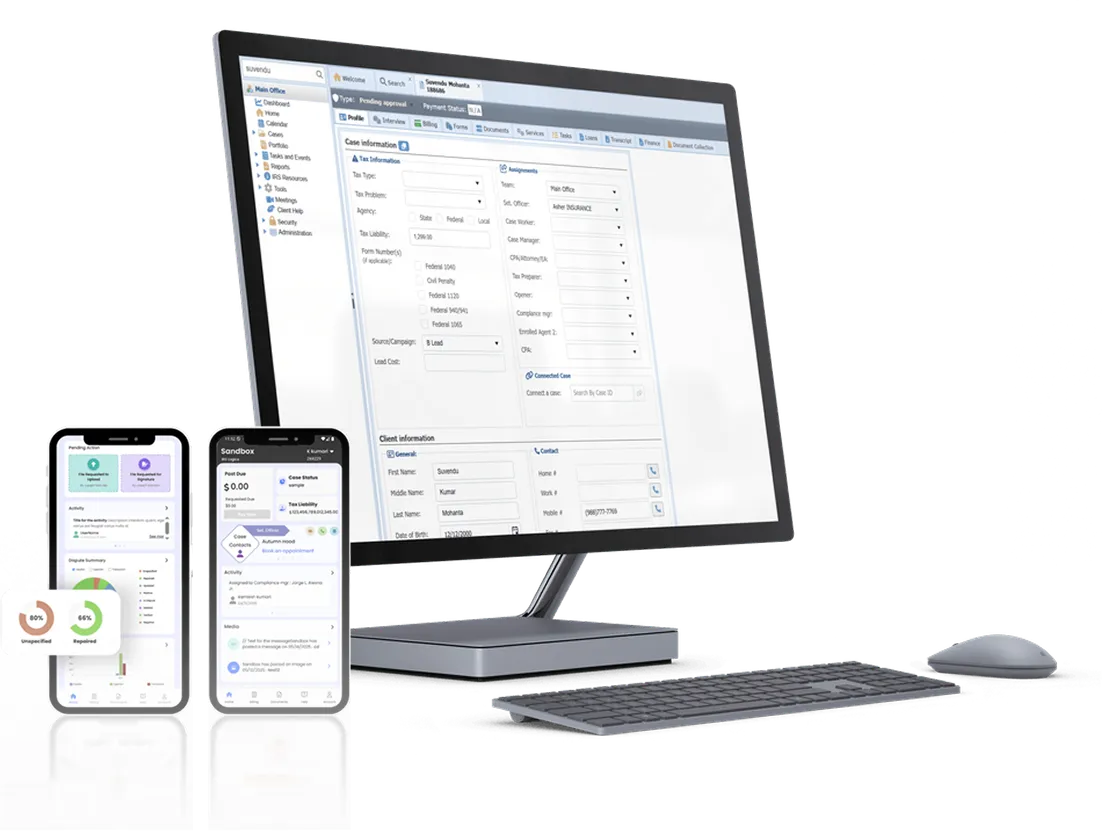
A scalable tax resolution system should begin with a centralized CRM capable of storing all client information, communication histories, IRS documents, and case files in one location. Workflow automation must be part of the system, ensuring that every case follows a consistent process and key deadlines are never missed. Real-time IRS transcript access allows your team to quickly gather accurate tax data, reducing manual effort and eliminating delays. Integrated billing, contract management, and payment processing help streamline the financial side of your practice, ensuring faster collections and fewer administrative burdens. A secure client portal enhances collaboration by allowing clients to upload documents, sign forms, and review their case progress from any device. Cloud-based accessibility ensures your team can work remotely while maintaining security and compliance. Together, these components form the technological backbone of a scalable tax resolution program.
Efficient tax resolution management begins with actively tracking each case’s progress and ensuring compliance with IRS deadlines. Firms should use reporting tools to identify workflow bottlenecks, staff delays, and areas where cases frequently stall. Maintaining open communication with clients especially during critical stages such as IRS collections—helps prevent misunderstandings and builds trust. Consistently reviewing forms and filings before submission reduces the risk of costly errors or rejected applications. Establishing internal quality checks, regular team meetings, and standardized file review procedures can significantly improve case accuracy and processing speed. When combined with a structured workflow, these best practices help your firm deliver predictable and high-quality results.
As your tax resolution program grows, hiring becomes a strategic necessity. Successful firms recruit a combination of tax resolution specialists, enrolled agents, support staff, and administrative personnel. Hiring individuals with strong communication skills and familiarity with IRS collection processes can significantly improve client interactions and case outcomes. Ongoing training is equally important. IRS programs, penalty abatement criteria, and tax laws evolve frequently, making continuous education essential for ensuring your team remains knowledgeable and effective. Cross-department collaboration also plays a crucial role in scaling. When your billing, intake, resolution, and support teams work cohesively, your firm can handle more cases with fewer mistakes and greater efficiency.
To scale successfully, your firm needs a strategic marketing approach. Promoting tax relief services effectively involves communicating your expertise, case success rates, and compliance knowledge. Building your credibility through testimonials, case studies, and educational content helps attract clients who are searching for trustworthy representation. Digital marketing strategies such as SEO, paid ads, webinars, and email campaigns help drive consistent leads to your firm. Referral programs can amplify your reach by leveraging relationships with accountants, attorneys, and financial advisors. Positioning your firm as a reliable, knowledgeable tax resolution provider is essential to attracting the volume needed for long-term scale.
Scalability requires constant evaluation. Firms must use analytics to measure performance, including case timelines, approval rates, staff productivity, and marketing ROI. Tracking client satisfaction helps identify whether communication, professionalism, and results meet client expectations. Regularly reviewing these insights allows you to spot inefficiencies and make informed decisions about staffing, technology adoption, and workflow adjustments. Continuous improvement is a vital element of a scalable tax resolution program. When your systems evolve with your firm’s growth, you ensure long-term sustainability and consistent quality.
The evolution of tax relief technology has dramatically changed the way tax resolution firms operate. Automation, data integration, and centralized systems allow firms to scale their services more effectively than ever before. By building strong workflows, training your team, and leveraging advanced software tools, your firm can handle more cases with greater precision and less effort. In an industry where accuracy, compliance, and reliability are essential, a scalable program ensures your firm remains competitive, adaptable, and prepared for the future.
1. What is a scalable tax resolution program?
A scalable tax resolution program is a structured system that allows a firm to handle increasing case volume without sacrificing quality, efficiency, or accuracy. It relies on standardized workflows, automation, and strong internal processes.
2. Why is technology important for scaling tax resolution services?
Technology reduces manual work, automates repetitive tasks, streamlines client communication, and centralizes case information. This helps firms manage more cases with fewer errors and less stress.
3. What tools help improve scalability in tax resolution?
Tax resolution CRMs, IRS transcript automation tools, secure client portals, billing integrations, and cloud-based systems all contribute to creating a scalable environment.
4. How do IRS transcripts influence tax resolution cases?
IRS transcripts provide critical information about balances, compliance history, and collection status. Automated retrieval helps firms begin case analysis faster and more accurately.
5. What workflows should a scalable tax resolution program include?
A scalable program should have workflows for intake, document collection, transcript analysis, financial review, form preparation, negotiations, and case resolution.
6. How can firms improve client communication during tax resolution cases?
Using centralized messaging tools, automated updates, and a secure client portal helps ensure clients remain informed and reduces confusion or delays.
7. What staff roles are important for a growing tax resolution department?
Key roles include enrolled agents, tax resolution specialists, document processors, client coordinators, and administrative support.
8. How can firms market tax resolution programs effectively?
Firms can use SEO, social media, paid ads, webinars, referral partnerships, and educational content to build awareness and attract new clients.
9. What metrics should firms track to measure scalability?
Important metrics include case resolution time, staff productivity, approval rates, revenue per case, client satisfaction, and workflow bottlenecks.
10. How often should firms update their processes?
Continuous review—monthly or quarterly—is ideal to identify inefficiencies, update procedures, and ensure the firm remains aligned with IRS changes and client expectations.
All
Tax Software
Workflow & Automation
Industry News
Resolution Tips
Tax Resolution Marketing
Lorem ipsum dolor sit amet, consectetur adipiscing elit. Suspendisse varius enim in eros elementum tristique. Duis cursus, mi quis viverra ornare, eros dolor interdum nulla, ut commodo diam libero vitae erat. Aenean faucibus nibh et justo cursus id rutrum lorem imperdiet. Nunc ut sem vitae risus tristique posuere.


Share this article directly by email. Simply enter the recipient’s details below.

Article has been send to you.